What analyst price targets do and don’t tell you
On this page
“Analyst raises target to $X” is one of the most common stock headlines. A price target is one analyst’s estimate, built on assumptions that can change quickly. The range of targets usually tells you more than any single number.
How a price target is built
A sell-side analyst estimates a company’s future earnings or cash flow, then applies a valuation method, such as a multiple of earnings or a discounted cash-flow model, to arrive at a price. Targets usually look about 12 months ahead.
Small changes to the inputs move the result a lot. A slightly higher growth rate or a higher valuation multiple can raise a target by a large percentage without anything new happening at the company.
Why targets spread so widely
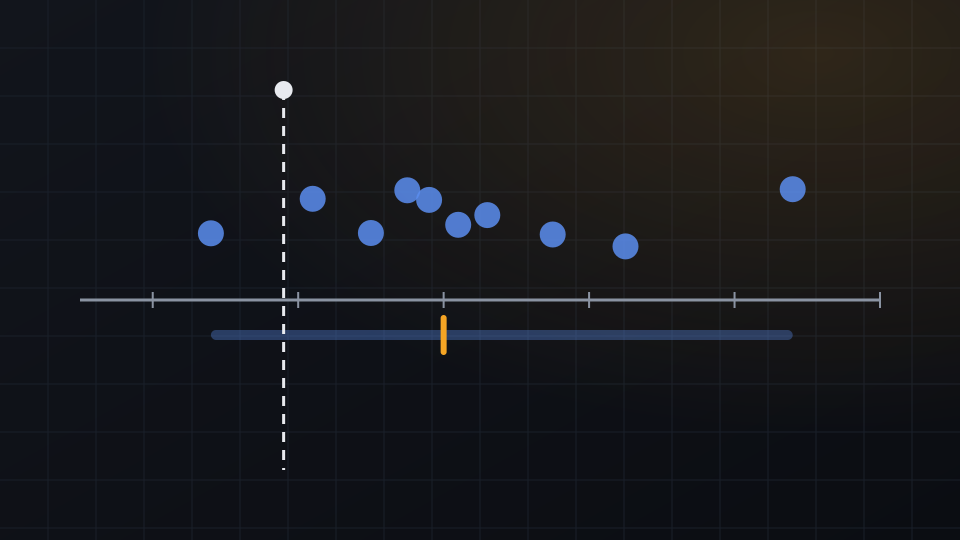
Different analysts make different assumptions, so targets for the same stock can be far apart. Data providers often publish the lowest, highest and median target along with the number of analysts covering the stock.
A wide range means the market disagrees about the company’s future. A narrow range means analysts see it similarly, which is not the same as being right.
Targets often follow the price
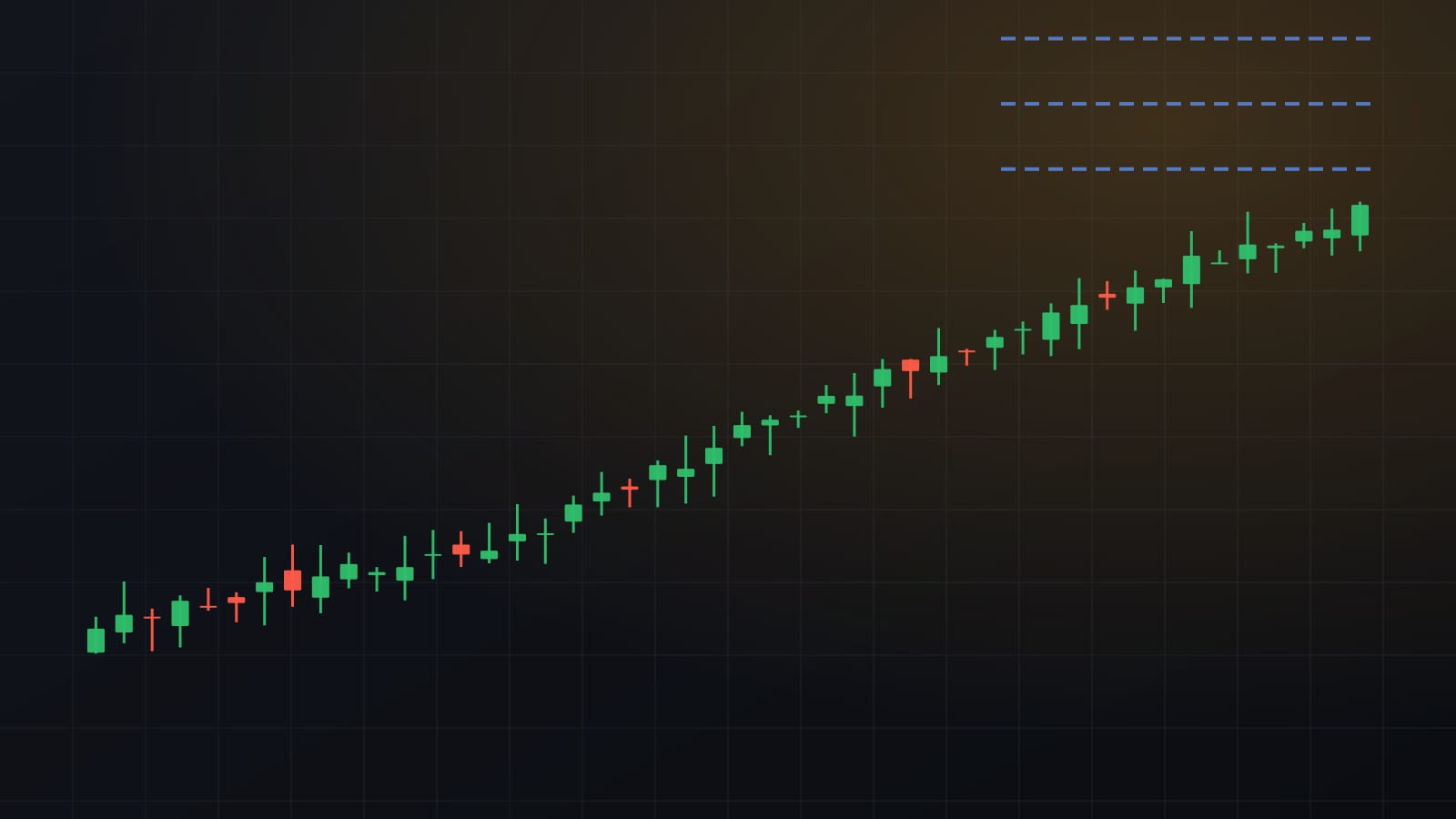
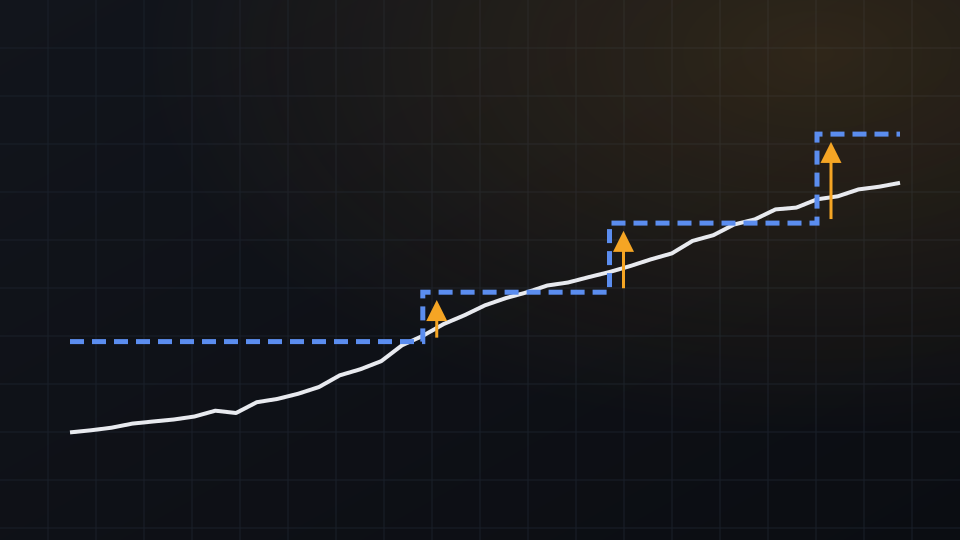
Targets are revised after earnings, guidance changes and big price moves. When a stock rallies far above the median target, analysts often raise their targets afterwards. A raised target is therefore sometimes a reaction to the move rather than a prediction of the next one.
How to use them
- Read the low, median and high together, and note how many analysts are included.
- Look for the reason behind a change: new earnings estimates matter more than a new multiple.
- Remember that the rating (buy, hold, sell) and the target can tell different stories.
- Check the chart: a target far above a falling price says little about the trend in front of you.
For education only, not financial advice. Crypto assets and stocks are volatile, and leveraged positions can lose more than the money you put in.
Get one like this every week
A five-minute market brief in your inbox each Monday. Free, unsubscribe anytime.
Or follow the Telegram channel @isoskwllsMarket now
Latest news